
Are forearm crutches easier than underarm crutches?
Crutches come in forearm and underarm styles, and people reasonably ask which one is easier. The first step is to ask who decides.
No single style is easier for every foot. The person managing your recovery should say which style fits your procedure, and they should fit it to you instead of leaving you to guess from a catalogue.
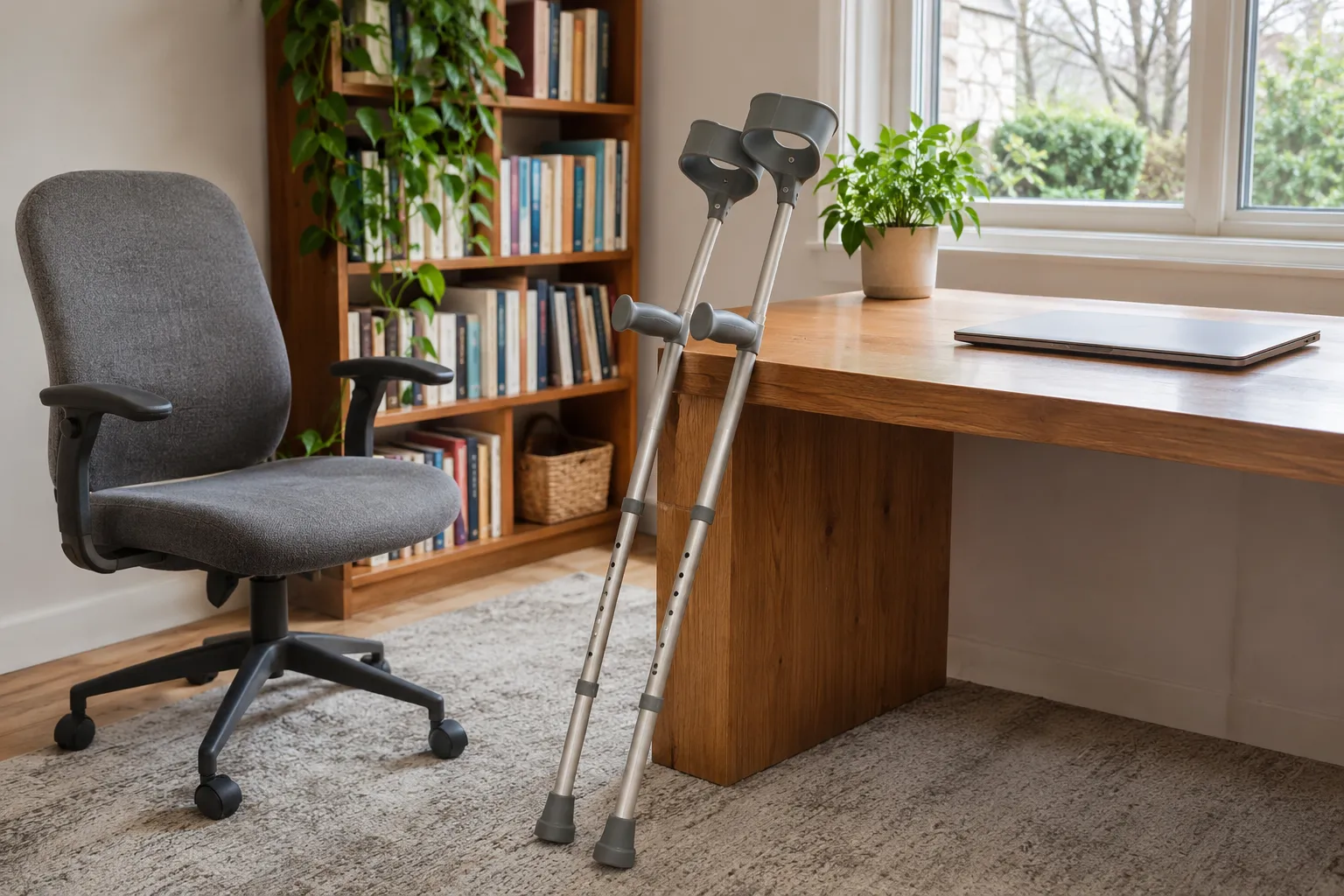
What the crutches are for
Crutches are a tool for a stage, not a permanent fixture. In its Achilles tendon rupture rehabilitation guidance, Cambridge University Hospitals NHS lists, for weeks 4 to 7 while wedges are removed, the goal that you can fully weight bear in the boot, using crutches as required for balance. In that stage the crutches serve balance while the foot takes weight.
That framing changes the question. If the crutch is there for balance, the best style is the one that keeps you steady and lets you follow your weight-bearing instructions.
Rehab leaflets for the weeks on crutches
The University Hospitals Plymouth NHS Trust publishes an Achilles tendon rupture rehabilitation leaflet. A review of Achilles tendon rupture mechanisms, rehabilitation principles and return to play goes deeper for readers who want it. After bunion surgery, MedlinePlus has discharge instructions for bunion removal.
Before the crutches go home with you
Before you leave the office or hospital, have the crutches adjusted and practice a few steps. Ask what weight your foot may carry and when that changes. Woodridge residents who want a second opinion on equipment can reach Downers Grove, Darien or Bolingbrook without a long trip.
A crutch that feels wrong on the first day is a small problem to raise at once. Raise it before you have spent a week working around it.