
Foot wounds and ulcers
A sore that looks too small to bother with is the earliest sign on this page. The six questions below start with naming the sore, move to how urgent it is and end with Charcot foot.
Name the sore first
APMA states: "A diabetic foot ulcer is an open sore or wound that occurs in approximately 15 percent of patients with diabetes and is commonly located on the bottom of the foot." That puts the check on the sole, which means looking at it on purpose.
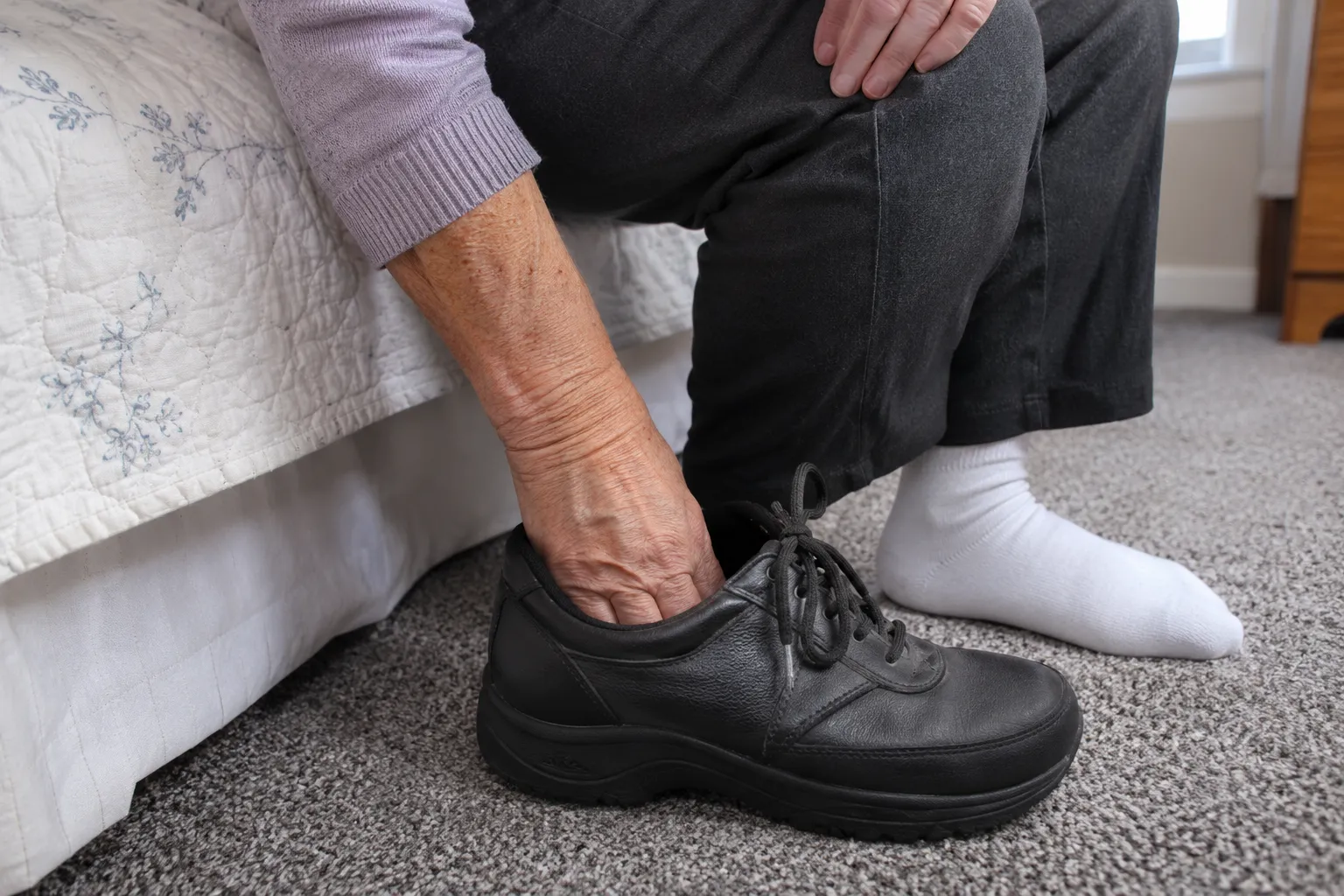
Start with what a diabetic foot ulcer is, then compare it with an ischemic ulcer. The MedlinePlus Medical Encyclopedia entry on Ischemic ulcers - self-care is a plain reference for the second.
Decide how urgent it is
Once a sore is confirmed, the next question is how fast to act. When a foot sore needs a doctor right away belongs before everything else. Settle it before choosing between an office in Woodridge and one in Downers Grove, Darien or Bolingbrook.
Why it lingers, and what comes next
If the sore is not closing, read why foot wounds heal slowly with diabetes. The research paper on Wound-Healing Peptides for Treatment of Chronic Diabetic Foot Ulcers and Other Infected Skin Injuries is a research read on the same problem.
Two questions look further ahead. Whether foot ulcers can be prevented is the question to ask before the next sore appears, and what Charcot foot is closes the list.