
How should children's shoes fit?
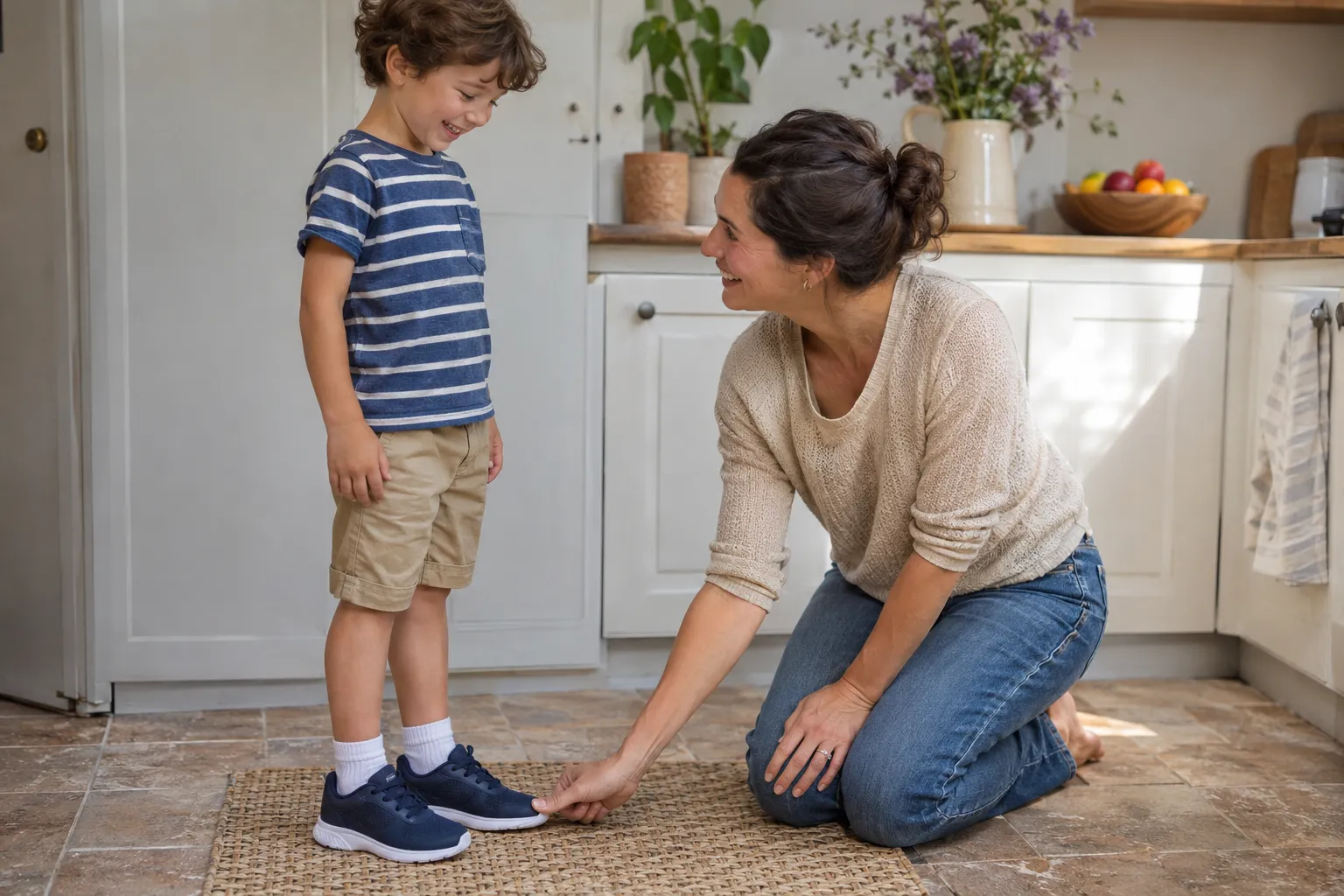
Parents in Woodridge ask how a child's shoe should fit, and the useful answer starts with what the shoe is for, not what it costs.
Fit the foot, not the price tag
A child's shoe should fit the foot in front of you. AAOS OrthoInfo puts price in its place. You do not need to buy the most expensive shoe, but you should purchase the one that fits your foot.
For everyday wear, APMA is specific about the style. For school-aged children, light, flexible, flat-soled shoes are still recommended for everyday use, unless there is a specific pathology requiring modification.
The exception inside that sentence
The last clause matters most. A specific pathology means a diagnosed foot problem, and in that case the everyday rule no longer covers the child. That exception is the reason a child with a persistent foot complaint should be examined rather than fitted by guesswork.
If a child keeps complaining about one pair of shoes, raise it with a foot specialist before buying a third pair.
Shoe-shopping guides for parents
Before you shop, read the Back-to-School Shoe Shopping Tips from Foot Health Facts alongside OrthoInfo's guide, Shoes: Finding the Right Fit. If your child plays sports, APMA also has a page on choosing shoes for sports. Families weighing inserts can read APMA's page on prescription custom orthotics and shoe inserts.
A watchful note
Start with the smallest complaint. If it repeats across shoes that each seemed fine, have the foot checked, and treat a trip to Downers Grove or Darien for a second opinion as ordinary.